
Abstract
Epilepsy is a chronic neurological disorder characterized by recurrent seizures resulting from abnormal and excessive neuronal activity. Although antiseizure medications (ASMs) remain the cornerstone of treatment, approximately one-third of patients develop drug-resistant epilepsy, highlighting the need for alternative therapeutic strategies. Increasing evidence suggests that gut microbiota play an important role in the pathophysiology of epilepsy through bidirectional communication along the gut-brain axis. Beyond cataloguing these associations, this review critically appraises the methodological quality and internal consistency of the existing evidence base, identifies recurring sources of contradiction across studies (sampling design, taxonomic resolution, confounding by diet, and ASM), and proposes an integrative framework in which dysbiosis is treated as a perturbation of a functionally interconnected gut-immune-neural network rather than an isolated biomarker. Experimental and clinical studies have demonstrated alterations in gut microbial composition in patients with epilepsy and in animal models, suggesting a potential disease-associated microbial signature. Moreover, interventions targeting gut microbiota, including ketogenic diet (KD), probiotics, prebiotics, antibiotics, and fecal microbiota transplantation (FMT), have shown promising anticonvulsant effects in preclinical studies, while clinical evidence remains limited and heterogeneous. Among these approaches, the KD currently has the strongest supporting evidence, whereas other microbiota-based therapies remain in the early stages of investigation. Despite substantial progress, causal relationships between alterations in the microbiota and epilepsy are not fully understood, and standardized clinical protocols are lacking. Rather than leaving this open-ended, we reach a graded conclusion: the KD and FMT are currently the only interventions supported by experiments that can distinguish causation from correlation and such evidence is confined to animal models; probiotic, prebiotic, short-chain fatty acid, and antibiotic data remain associative. Therefore, the priority for the field is not further cross-sectional taxonomic profiling-which cannot resolve causality by design-but rather longitudinal pre-diagnosis sampling, function-level multi-omics readouts, and donor- or strain-characterized interventional trials with prespecified microbiota endpoints. Until these are available, microbiota modulation should be positioned as an adjunctive, mechanistically stratified strategy under investigation for drug-resistant epilepsy, rather than as an established therapeutic option.
Keywords: Epilepsy, gut-brain axis, microbiota, microbiome, dysbiosis
MAIN POINTS
• Epilepsy affects over 50 million people worldwide, and a substantial proportion of patients remain drug-resistant.
• Growing evidence indicates that the gut microbiota contributes to seizure susceptibility and to epileptogenesis via immune, metabolic, and neural pathways of the gut-brain axis.
• Beyond summarizing this literature, this review critically evaluates the internal consistency and causal strength of the evidence supporting each microbiota-targeted approach—ketogenic diets, probiotics, prebiotics, synbiotics, fecal microbiota transplantation and short-chain fatty acids—and proposes an integrative framework in which seizure susceptibility is governed by the functional output of the gut microbial community rather than any single taxon.
• This framework reconciles otherwise contradictory findings across studies and identifies the specific experimental designs needed to move the field from descriptive association toward mechanism-based, personalized microbiota therapeutics for epilepsy.
INTRODUCTION
Epilepsy is a neurological disorder characterized by recurrent seizures resulting from abnormal brain activity. The International League Against Epilepsy defines an epileptic seizure as “a transient occurrence of signs and/or symptoms due to abnormal excessive or synchronous neuronal activity in the brain,” with epilepsy diagnosed when there is an enduring predisposition to generate such seizures-established by two unprovoked seizures more than 24 hours apart, one unprovoked seizure with a high (>60%) probability of recurrence within 10 years, or an established epilepsy syndrome.Epileptiform activity on electroencephalography and epileptogenic lesions on neuroimaging remain the two principal parameters for estimating recurrence risk. Epilepsy is among the most common neurological disorders, with a pooled incidence of 61.4 per 100,000 person-years across international cohorts. Antiseizure medications (ASMs)—a more accurate term than “antiepileptic drugs,” since they suppress seizures rather than epileptogenesis itself—remain the cornerstone of treatment, but roughly one-third of patients develop drug-resistant epilepsy despite adequate ASM trials. Beyond seizures themselves, drug-resistant epilepsy carries substantial burden through increased mortality risk, cognitive and psychiatric comorbidity, and reduced quality of life, which has driven sustained interest in adjunctive strategies that act through mechanisms distinct from conventional ASM pharmacology. For drug-resistant patients who are not surgical candidates, the ketogenic diet (KD)—a high-fat, adequate-protein, low-carbohydrate regimen—is an established first-line therapy in glucose transporter-1 deficiency syndrome and an effective adjunct more broadly, reducing seizure frequency in both children and adults.,, Its antiseizure mechanisms are incompletely understood but implicate altered energy metabolism, enhanced gamma-aminobutyric acid (GABAergic) transmission, modulation of ion channels, and reduced oxidative stress and neuroinflammation., Increasing attention has turned to the gut microbiota as a mediator of these effects: specific microbial taxa are required for the KD’s full antiseizure efficacy in mice, acting through hippocampal GABA/glutamate balance and related metabolic pathways, establishing the KD as both a treatment and a model system for studying microbiota-brain interactions. A narrative review of nearly 200 studies has since consolidated this link, showing that the KD raises the Bacteroidetes/Firmicutes ratio and promotes short-chain fatty acid (SCFA) and neurotransmitter production, and proposing bacterial signatures as candidate biomarkers of KD responsiveness; a 2026 pediatric study identified baseline microbiota signatures that distinguish KD responders from non-responders.
Microorganisms—bacteria, yeasts, viruses—have long been known to coexist with the host across body sites. The microbiota constitutes roughly 90% of the body’s total cell population and harbors nearly 150-fold more genetic information than the human genome;, microbiome additionally encompasses collective genomes, metabolites, and environmental context. Each healthy adult harbors over 1,000 gut bacterial species, dominated by Bacteroidetes and Firmicutes,and unlike the largely stable host genome, this community is highly dynamic and environmentally responsive-an attractive therapeutic target. Gut dysbiosis can alter intestinal permeability, metabolism, and immune signaling and has been implicated in gastrointestinal, autoimmune, and neuropsychiatric diseases,,,,,,, which has motivated interest in probiotics, prebiotics, and fecal microbiota transplantation (FMT) as therapeutic strategies.
The Gut-brain Axis
The gut-brain axis is a bidirectional communication network linking the gut and its microbiota with the brain, maintained not only by the vagus nerve and autonomic nervous system (ANS) but also by the enteric nervous system (ENS), immune system, and neuroendocrine signaling. The ANS and ENS jointly regulate gastrointestinal motility, secretion, and local blood flow while relaying sensory information from the gut wall to the central nervous system (CNS), and the immune system contributes a further signaling layer: gut-associated lymphoid tissue continuously samples luminal microbial antigens and translates microbial composition into circulating cytokine and immune-cell signals capable of reaching the brain. Enteroendocrine “neuropod” cells form synaptic connections with vagal neurons and transmit luminal signals using glutamate, and gut microorganisms themselves activate vagal and enteric afferents directly. Vagotomy studies underline the functional importance of this signaling: vagotomized patients show increased psychiatric morbidity, and vagotomized rodents show reduced locomotor activityand impaired neurogenesis, consistent with the therapeutic use of vagus nerve stimulation in depression and epilepsy—implying that microbiota-mediated vagal modulation could affect either condition. The microbiota also produces and regulates neurotransmitters—tryptophan, serotonin, GABA, epinephrine, norepinephrine, dopamine.,,,,,,,,,, The microbiome encodes glutamate decarboxylase, converting glutamate to GABA. Microbially produced serotonin shapes ENS maturation. SCFAs generated by microbial fermentation enter systemic circulation and influence CNS function, and the microbiota is closely linked to the hypothalamic-pituitary-adrenal (HPA) axis: germ-free (GF) animals show altered hormonal signaling and neurotransmission,, and GF mice show increased embryonic blood-brain barrier (BBB) permeability and reduced occludin expression that persists into adulthood unless microbiota is restored after birth. More recent metabolomic work has identified altered tryptophan metabolism as a candidate mechanistic node linking gut microbial activity to seizure-related brain metabolism in pediatric epilepsy, while an emerging conceptual framework proposes environmental factors such as heat stress as upstream modulators of this axis via microbial diversity and hydration-dependent seizure thresholds.
These connections position the gut microbiota as a plausible contributor to the pathophysiology of neurological diseases, and correcting dysbiosis has emerged as a candidate therapeutic strategy not only in neurodevelopmental and neuropsychiatric disorders but also in Alzheimer’s disease, Parkinson’s disease, and epilepsy.
The Role of Microbiota in Epilepsy
Gastrointestinal symptoms are common in epilepsy, and epilepsy prevalence is elevated among patients with inflammatory bowel disease, supporting a bidirectional gut-epilepsy relationship in which the microbiota appears central. Comparable alterations have been reported in experimental models: in one rare study, dysbiosis-induced intestinal damage increased absence-seizure activity, and FMT-driven restoration of gut microbial composition partially normalized intestinal morphology and reduced seizure frequency, suggesting that gut-derived inflammatory and metabolic signals may influence thalamocortical circuits in absence seizures-though mechanistic studies remain limited.
In population-based clinical studies, comparisons of epilepsy patients and healthy controls consistently report differences in gut microbiota composition,,,, but not the same differences: in a 14-vs.-30 comparison, controls showed higher diversity and Bacteroidetes dominance versus Firmicutes dominance in drug-resistant patients; a larger study similarly found Firmicutes dominant only in the drug-resistant group, with seizure frequency correlating with microbial composition and Bifidobacterium/Lactobacillus lower in more frequent seizures; while a 55-vs.-46 cohort instead reported increased Actinobacteria and Verrucomicrobia and decreased Proteobacteria.Taken together, these studies illustrate a recurring problem in the field rather than a converging signal. Smith et al. and Peng et al. reach opposite conclusions about which phylum dominates in drug-resistant epilepsy relative to controls, Gong et al.implicates yet different phyla, and none of the three cohorts exceeds low tens to low hundreds of participants. Because ASM regimens, disease duration, dietary intake, and geographic cohorts were not consistently controlled or reported across these studies, phylum-level shifts attributed to epilepsy cannot be distinguished with confidence from shifts attributable to its treatment or from unrelated population-level variation in baseline microbiota composition. This inconsistency is a structural limitation of the descriptive literature as a whole: phylum-level taxonomy is a coarse readout that can mask convergent functional changes (e.g., reduced SCFA-producing capacity) occurring through divergent taxonomic routes, which is one reason cross-cohort taxonomic signatures have so far failed to replicate. Microbiome perturbations also track acute seizure states: patients with status epilepticus and new-onset refractory status epilepticus show markedly altered, more variable fecal microbiomes than chronic epilepsy patients, with shifts correlating with cytokine levels and evolving across the disease course. Dysbiosis-driven neuroinflammation has also been implicated in comorbid depression in epilepsy via a proposed “gut-brain-emotion” network, with C-reactive protein-based subtyping suggested to individualize treatment, and probiotic supplementation has been reported to improve seizure control and depressive symptoms together via shared HPA-axis and glutamatergic mechanisms.
Because epilepsy pathogenesis is closely tied to neuroimmunity, microbiome-associated pro-inflammatory states may plausibly contribute via the same microglia/astrocyte activation that drives epileptogenesis; the gut microbiota shapes immune cell development generally—for example, specific Clostridium species induce colonic regulatory T-cells that constrain systemic inflammatory tone, and the microbiota similarly regulates type-2 immune responses via retinoic acid-related orphan receptor γt-expressing T-cells—and microglial differentiation specifically in an age- and sex-dependent manner, with GF and antibiotic-treated animals showing microglial and immune deficits partially reversible by recolonization. Mechanistically, barrier disruption may allow bacterial metabolites, lipopolysaccharide, and cytokines into circulation, damaging the BBB, while reduced anti-inflammatory SCFA levels may compound this permeability and promote hippocampal/cortical apoptosis. Directly relevant to seizures, intestinal inflammation increased convulsive activity and reduced ASM efficacy in a pentylenetetrazol (PTZ) mouse model, while butyrate reversed this via reduced inflammation and oxidative stress ().
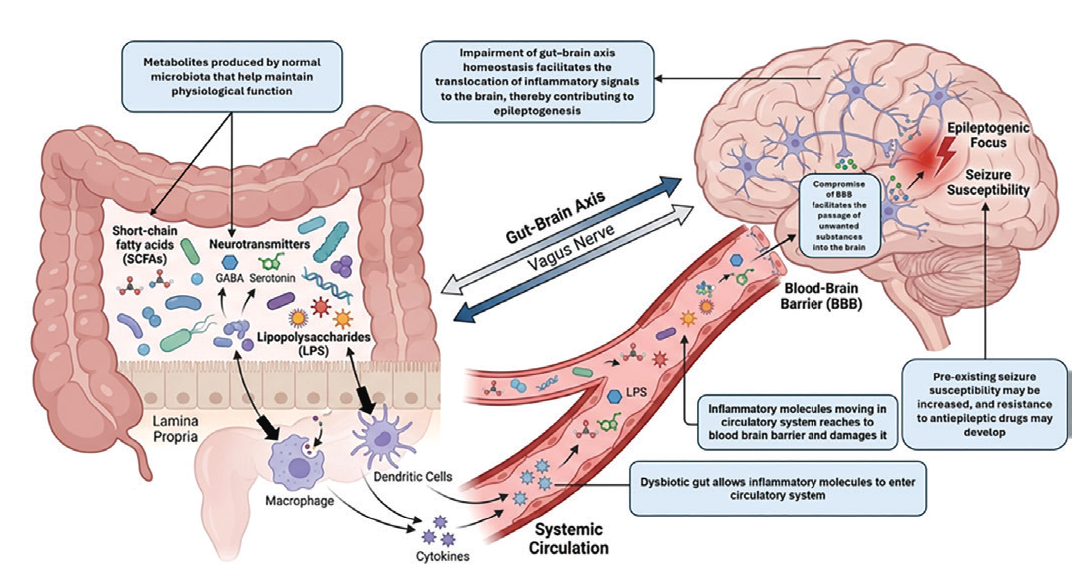
Proposed gut microbiota-brain interactions in epilepsy. The gut microbiota influences brain excitability through immune, metabolic, and neural pathways. Dysbiosis may promote neuroinflammation and alter neuroactive metabolite production, contributing to seizure susceptibility. Bidirectional interactions suggest that both epilepsy and its treatments can modify microbial composition. Targeting the gut microbiota represents a potential therapeutic avenue in epilepsy
GABA: Gamma-aminobutyric acid
Beyond inflammation, the microbiota directly shapes the excitation-inhibition balance disrupted in epilepsy: Lactobacillus and Bifidobacterium produce GABA, Escherichia and Bacillus produce norepinephrine/dopamine,and Coprococcus, Ruminococcus, and Turicibacter correlate with glutamate/glutamine levels; FMT from KD-treated donors and KD-associated Akkermansia/Parabacteroides each raised hippocampal GABA/glutamate ratio and conferred seizure protection. The microbiota also modulates hippocampal/amygdalar GABA and N-methyl-D-aspartate receptor expression and brain-derived neurotrophic factor—a key regulator of excitatory-inhibitory transmission during epileptogenesis—which is deficient in GF mouse hippocampus and cortex. Collectively, these findings support a role for the gut-brain axis in epileptogenesis and seizure severity, though, as detailed above, this support is largely at the level of biological plausibility rather than confirmed causation in humans.
Microbiota-targeted Therapeutic Approaches for Epilepsy
Therapeutic interventions aimed at modulating the gut microbiota, correcting dysbiosis, and promoting a healthy gut-brain axis may offer hope for patients with drug-resistant epilepsy, despite current treatment options. A healthy microbiota may reduce seizure generation by restoring disrupted gut-brain axis mechanisms involved in epilepsy pathophysiology, while also potentially improving response to ASMs by supporting drug metabolism and absorption. Microbiota-targeted approaches include dietary interventions, antibiotics, probiotics, prebiotics, and FMT.
Diet
The KD is the most-studied dietary intervention in epilepsy, and evidence linking its antiseizure effects to the gut microbiota keeps accumulating: pediatric cohort studies report that KD reduces microbial diversity while shifting composition toward a Bacteroidetes-enriched, Firmicutes-depleted profile that correlates with clinical response,broadly consistent with the gnotobiotic mechanistic work described below—though a study in 12 children with drug-resistant epilepsy instead found reduced beneficial bacteria and increased pathobiont Escherichia coli after KD.This literature remains limited in scope, and the Olson et al. and Lindefeldt findings are difficult to reconcile at face value: the former, in gnotobiotic mice, demonstrates specific microbiota-dependent seizure protection, while the latter, in children, reports an unfavorable microbial shift under the same intervention. Rather than a contradiction, this more plausibly reflects a mismatch in what is measured—a mechanistic, taxon-specific causal effect under controlled gnotobiotic conditions versus an uncontrolled clinical before-after comparison in which caloric restriction, fiber intake, and baseline microbiota are not held constant. This gap between causally validated preclinical mechanisms and associative human observations recurs throughout this literature and is, in our view, the central methodological fault line separating mechanistic plausibility from clinical proof.
SCFAs (acetate, propionate, butyrate)—fermentation products with established roles in gut-brain communication—cross the BBB, modulate neuroinflammation, regulate microglial activation, and influence neurotransmitter systems.,,Butyrate, the most studied, is both an epithelial energy source and a histone deacetylase inhibitor with anti-inflammatory, neuroprotective effects, reducing seizure severity in PTZ models and suppressing neuroinflammation in traumatic brain injury epileptogenesis model. Prebiotic/synbiotic interventions that raise endogenous SCFA levels similarly reduce seizure susceptibility and neuroinflammation preclinically,, and propionate reduced epileptiform discharge frequency ex vivo in pediatric cortical tissue—but randomized clinical trials of SCFA supplementation in epilepsy are still lacking. This is changing: a 2026 murine drug-resistant-epilepsy study found systemic SCFA supplementation disease-modifying—reducing seizure progression and clustering and improving cognition, with corroborating changes in human epilepsy brain tissue—and a 2026 meta-analysis of preclinical models found SCFAs and SCFA-producing probiotics consistently reduced seizure susceptibility across chemoconvulsant and kindling paradigms.
Antibiotics
Few studies address antibiotic use in epilepsy. A retrospective study of six drug-resistant patients found certain antibiotics reduced seizure frequency, implicating gut-microbiota-mediated modulation. The relationship may also run in the opposite direction: some ASMs themselves possess intrinsic antimicrobial activity against common gut bacterial species in vitro, raising the possibility that long-term ASM use could itself reshape the gut microbiota independent of any dietary or antibiotic co-exposure, a confound rarely addressed in the clinical microbiota literature. Yet penicillins, cephalosporins, and carbapenems can themselves provoke seizures, particularly with renal dysfunction:, cephalosporins via GABAergic inhibition and carbapenems via inhibitory neurotransmitter interference., Antibiotics also disrupt both beneficial and pathogenic taxa, contributing to dysbiosis; further work is needed to determine how different agents modulate the microbiota and, in turn, seizure mechanisms. These dual effects highlight the complexity of interpreting antibiotic-related neurological outcomes. A 2025 mechanistic review proposed a unifying hypothesis: antibiotics affect seizure activity primarily through microbiota-dependent gut-brain modulation rather than direct neurotoxicity alone, with net effect depending on spectrum, dose, and which taxa are depleted or spared.
Probiotics and Prebiotics
Probiotics are defined by Food and Agriculture Organization of the United Nations/World Health Organization as “live microorganisms which, when administered in adequate amounts, confer a health benefit on the host,” typically Lactobacillus and Bifidobacterium formulations thought to correct dysbiosis and regulate immune/inflammatory responses via mechanisms overlapping with those described above, including GABA production, SCFA generation, and modulation of gut-associated immune signaling;prebiotics are non-digestible substrates such as inulin and fructooligosaccharides that selectively promote such growth, with reduced intake—linked to Western-style diets—associated with obesity, metabolic syndrome, and inflammatory disease.
Preclinically, several multi-strain Lactobacillus/Bifidobacterium mixtures attenuated PTZ-kindling progression and seizure severity in Wistar rats,,, and synbiotic/probiotic-prebiotic combinations reduced seizure frequency and cognitive deficits in kainic acid and PTZ models via reduced inflammation and oxidative stress and increased SCFA production., However, a similar three-strain combination produced no independent reduction in seizure duration or severity in a different PTZ paradigm, its only measurable benefit being potentiation of co-administered diazepam. In a post-traumatic epilepsy (PTE) model, a 7-strain probiotic with or without prebiotic inulin enhanced lacosamide’s seizure control and improved locomotor, anxiety-like, cognitive, and pain-threshold comorbidities.This preclinical heterogeneity is informative rather than incidental because strain identity, dose, duration, seizure model, and timing relative to kindling all vary simultaneously across these studies; the field cannot currently distinguish genuine strain- or model-specific biology from underpowered single-study effects—a standardization problem rather than a mechanistic one—which limits claims that probiotics constitute a uniform therapeutic class rather than a set of strain-specific interventions whose active principle remains unidentified.
Clinical data remain sparser: propionate reduced epileptiform discharge frequency ex vivo in pediatric temporal-lobe tissue, and 28.9% of drug-resistant patients receiving a four-month probiotic mixture achieved ≥50% seizure reduction, largely sustained four months post-discontinuation. This evidence has since been consolidated in a 2025 meta-analysis of six randomised controlled trials (656 patients) showing probiotics plus ASMs improved response rates and reduced seizure frequency/duration versus ASMs alone without excess adverse events-though the authors stressed persistent trial heterogeneity and the need for larger, multicenter studies; a companion review similarly found convergent but insufficiently standardized signals across probiotic and KD studies, and a 2025 canine drug-resistant-epilepsy pilot extended these behavioral and seizure benefits across species.
Fecal Microbiota Transplantation
FMT transfers processed donor fecal material into a recipient’s gut via oral capsule or endoscopy that can reduce pathogen colonization and enhance host resistance through immune regulation and restoration of colonization resistance against pathobionts,with established efficacy in ulcerative colitis and Clostridioides difficile infection, the two indications for which controlled trial data and regulatory experience are most mature., In GF mice, FMT from KD-fed donors or KD-associated organisms raised seizure threshold, and clinically, FMT fully suppressed seizures for 20 months post-ASM discontinuation in a patient with Crohn’s disease and 17 years of epilepsy—though long-term safety and efficacy data remain absent. In a PTE rat model, pre-existing microbial composition and SCFA profile—rather than injury-induced dysbiosis—predicted PTE risk, and in a follow-up study, FMT from PTE-prone donors conferred mild-to-moderate pro-epileptic effects on recipients, confirming that transferred microbiota actively modulates susceptibility.
Read together, this literature makes a stronger causal case than the cross-sectional taxonomic studies described earlier: donor microbiota transfers either protection or susceptibility, the clearest evidence available that gut composition is not merely a passive marker of epilepsy. Yet the entire human clinical basis for this intervention is a single case report; no controlled human FMT trial in epilepsy exists, epilepsy-specific donor-selection and safety standards are undefined, and the same paradigm that shows FMT protective with one donor shows it pro-epileptic with another—indicating that clinical translatability depends entirely on donor characteristics not yet defined. This directional dependence is arguably the strongest argument in this review that microbiota-targeted therapy cannot be a one-size-fits-all intervention and must instead be developed as a donor- or strain-characterized, mechanistically stratified approach. Consistent with this, microbiota-driven intestinal dysfunction contributes to seizure susceptibility in an absence-epilepsy model, where FMT-based restoration attenuated seizure activity, and a 2026 study showing SCFA supplementation attenuates post-traumatic brain injury neurologic injury via a gut-brain-microglia axis further supports microbiota-targeted strategies in post-traumatic epileptogenesis.
Toward an Integrative Framework: From Association to Mechanism
The preceding sections deliberately traced each intervention class separately; however, when taken in isolation, taxonomic association studies, dietary trials, antibiotic case series, probiotic experiments, and FMT studies each tell an incomplete story. Read as a single body of evidence, they converge on a more specific claim than “the microbiota is altered in epilepsy”: they indicate that seizure susceptibility is governed by the functional output of the gut microbial community (SCFA production, GABA/glutamate precursor supply, barrier integrity, vagal and immune signaling) rather than by any single taxon or phylum ratio. This reframing has direct explanatory power for two puzzles raised above. First, it explains why taxonomic signatures fail to replicate across cohorts:,, different bacterial assemblages can converge on similar functional outputs, so taxonomy is a noisy proxy for the mechanistically relevant variable. Second, it explains the directional dependence of FMT outcomes:,,,,,,,,,,,,,,,,,,,,,,,,,,,,,,,,,,,,,,,,,,,,,,,,,,,,,,,,,,,,,,,,,,,,,,,,,,,,,,,,,,,,,,,, whether a donor community is protective or pro-epileptic should depend on its net functional output, not simply on which phyla it contains. Under this view, dysbiosis in epilepsy is best modeled as a perturbation of an interconnected gut-immune-neural regulatory network-analogous to a loss of ecological stability in a microbial community, in which the system’s net functional state, not its species list, determines whether it buffers or amplifies neuronal hyperexcitability. When evaluated against this framework, the KD and FMT provide the field’s only two genuinely causal demonstrations (via gnotobiotic reconstitution and donor transfer, respectively) that a defined microbial functional state is sufficient to shift the seizure threshold; probiotic, prebiotic, SCFA, and antibiotic studies remain correlational or only partially mechanistic by comparison. summarizes this stratification.
Table 1. Overview of microbiota-targeted therapeutic strategies investigated in epilepsy
Therapeutic strategy | Approximate number of published studies* | Evidence level | Overall findings | Main proposed mechanisms | Current limitations |
|---|---|---|---|---|---|
Ketogenic diet | >20 preclinical, >15 clinical | High | Consistently reduces seizure frequency, particularly in drug-resistant epilepsy. Several studies suggest that part of its antiseizure efficacy is microbiota-dependent. | Altered gut microbial composition, increased GABA/glutamate ratio, reduced neuroinflammation, metabolic reprogramming | Mechanisms remain incompletely understood; long-term microbiota consequences remain controversial |
Probiotics | ~15-20 preclinical, 3-5 clinical | Moderate | Most animal studies report reduced seizure susceptibility, delayed seizure onset, and improved cognitive outcomes. Limited clinical studies suggest seizure reduction in a subset of patients. | Restoration of dysbiosis, SCFA production, immunomodulation, neurotransmitter regulation | Small sample sizes and lack of standardized probiotic formulations |
Prebiotics | ~10 preclinical, very few clinical | Low-moderate | Generally associated with reduced neuroinflammation and improved seizure-related outcomes in animal models. | Increased SCFA production, enhancement of beneficial bacterial populations, improved gut barrier function | Lack of epilepsy-specific clinical trials |
Synbiotics (probiotic+prebiotic) | ~5-10 preclinical, very limited clinical | Low-moderate | Often show greater efficacy than individual probiotic or prebiotic interventions in experimental studies. | Synergistic microbiota modulation, enhanced SCFA production, anti-inflammatory effects | Clinical evidence remains scarce |
Short-chain fatty acids (SCFAs; butyrate, propionate, acetate) | ~10-15 preclinical, very limited human evidence | Low-moderate | Generally demonstrate anticonvulsant, neuroprotective, and anti-inflammatory properties in experimental epilepsy models. | HDAC inhibition, blood-brain barrier stabilization, microglial regulation, oxidative stress reduction | Few direct supplementation studies and lack of controlled clinical trials |
Antibiotics | <10 studies | Low | Some studies report reduced seizure frequency, whereas others highlight seizure-provoking effects of specific antibiotics. | Microbiota depletion and restructuring of gut microbial communities | Conflicting findings; potential adverse neurological effects |
Fecal microbiota transplantation | ~10 preclinical, 1-3 clinical reports/case studies | Low | Animal studies support a causal role of microbiota in seizure susceptibility. Human evidence remains limited but promising. | Global restoration of microbial ecosystem, immunomodulation, metabolite transfer | Lack of randomized controlled trials; donor selection and safety concerns |
Postbiotics/microbial metabolites | Emerging field (~5-10 studies) | Low | Early evidence suggests beneficial effects on neuronal excitability and neuroinflammation. | Direct action of microbial metabolites on neuronal and immune pathways | Insufficient clinical evidence |
Combined microbiota-targeted therapies with antiseizure drugs | Very limited (<5 studies) | Low | Preliminary studies indicate that microbiota-targeted interventions may enhance antiseizure drug efficacy and improve comorbidities. | Improved drug metabolism, anti-inflammatory effects, modulation of gut-brain signaling | Requires validation in larger experimental and clinical studies |
*: Approximate numbers are based on the currently available epilepsy-microbiota literature, including experimental, translational, and clinical studies published up to 2025, HDAC: Histone deacetylase, GABA: Gamma-aminobutyric acid
DISCUSSION
Weighed against the causal-versus-associative distinction established above, the evidence in this field does not support treating “the gut microbiota is altered in epilepsy” as a settled premise from which therapeutic conclusions can be drawn; only the KD and FMT literatures currently supply experiments capable of distinguishing cause from correlation, and even these are causal only in animal models. When stated at the level that the evidence can bear, three claims are supportable. First, altered gut microbial composition is reproducibly detected in patients with epilepsy and in animal models, even though the specific taxa involved differ between cohorts., Second, studies involving microbiota interventions collectively indicate that modulation of the gut microbiota can influence seizure susceptibility, epileptogenesis, and several epilepsy-associated comorbidities.,, Third, these observations support the concept that the gut microbiota are not merely altered as a consequence of epilepsy but may actively participate in disease mechanisms through the gut-brain axis, although in humans, this remains an inference from biological plausibility rather than a demonstrated causal relationship.
Several biological pathways have been proposed to explain how gut microorganisms may affect epileptic processes. Dysbiosis may increase intestinal permeability and facilitate the systemic dissemination of bacterial metabolites, lipopolysaccharides, and pro-inflammatory cytokines, ultimately contributing to BBB dysfunction and neuroinflammation. Since neuroinflammation is increasingly recognized as a critical component of epileptogenesis, microbiota-induced immune activation may represent an important mechanistic link between gut dysbiosis and seizure generation. In parallel, gut microorganisms are capable of producing or modulating neurotransmitters and neuroactive compounds, including GABA, serotonin, dopamine, norepinephrine, and glutamate-related metabolites. These molecules may influence neuronal excitability and contribute to the disruption of the excitation-inhibition balance that characterizes epilepsy. Moreover, microbial metabolites such as SCFAs appear to regulate microglial activation, oxidative stress, neurotrophic signaling, and BBB integrity, further supporting the biological plausibility of microbiota-mediated effects on seizure susceptibility. Among currently available microbiota-targeted interventions, the KD possesses the strongest evidence base. In contrast, evidence supporting probiotics, prebiotics, synbiotics, SCFA supplementation, and FMT remains promising but comparatively limited, with most available data originating from experimental studies and relatively few clinical investigations. Most studies evaluating these approaches have been conducted in experimental models, while human studies are characterized by small sample sizes, heterogeneous patient populations, and considerable variability in treatment protocols. Consequently, the clinical applicability of many microbiota-targeted therapies remains uncertain. A further, often-overlooked source of heterogeneity is demographic and geographic variation: gut microbiota composition differs substantially by age, sex, diet, and geographic region, independent of epilepsy status, yet few of the studies reviewed above matched cases and controls on these variables or replicated findings across cohorts from different countries. Until microbiota studies in epilepsy routinely control for this baseline population-level variability, it will remain difficult to distinguish disease-specific signals from ordinary demographic noise. Despite the rapid expansion of research in this field, several important knowledge gaps remain. First, no specific microbial signature has yet been universally identified as a reliable biomarker for epilepsy diagnosis, prognosis, or treatment response. Different studies have reported distinct alterations in microbial taxa, and reproducibility across populations remains limited. Second, the direction of causality remains unclear. While dysbiosis may contribute to epileptogenesis, seizures themselves, ASMs, dietary modifications, and lifestyle factors may also alter gut microbial composition., Distinguishing cause from consequence, therefore, represents a major challenge, and it is largely unaddressed by the cross-sectional designs reviewed above: a single-timepoint comparison between patients and controls cannot, in principle, distinguish a microbiota that causes seizures from one that is reshaped by them or by their treatment. Resolving this would require that designs already validated in the FMT literature discussed above—longitudinal pre-diagnosis sampling in at-risk cohorts combined with GF or antibiotic-depleted rodent recolonization from human-derived material—be extended systematically across intervention classes rather than remain confined to isolated proof-of-concept studies at present. Third, most current studies rely primarily on taxonomic analyses, whereas the functional consequences of microbiome alterations may be more relevant than changes in microbial abundance alone. Future investigations integrating multi-omics (metagenomics, metatranscriptomics, metabolomics, and proteomics) may provide a more comprehensive understanding of the functional microbiome in epilepsy. Consistent with this outlook, recent literature has begun to advocate for multi-omics integration coupled with artificial intelligence-driven analytical approaches, together with clinically actionable inflammatory subtyping strategies, as tools to move the field from descriptive taxonomic associations toward individualized, mechanism-based microbiota therapeutics for epilepsy and its neuropsychiatric comorbidities.
Another important limitation is the lack of standardization among microbiota-targeted interventions. Probiotic studies utilize different bacterial strains, dosages, treatment durations, and formulations, making direct comparisons difficult. Similarly, optimal donor selection criteria, transplantation protocols, and long-term safety profiles for FMT remain poorly defined. The development of standardized protocols and consensus guidelines will be essential before these approaches can be incorporated into routine clinical practice. The relationship between microbiota-targeted therapies and ASMs also warrants further investigation. Emerging evidence suggests that the gut microbiota may influence drug metabolism, bioavailability, and therapeutic responsiveness. Conversely, ASMs may themselves alter microbial composition and function. Understanding these bidirectional interactions may facilitate the development of personalized therapeutic strategies that combine conventional pharmacological treatments with microbiota-directed interventions. Such approaches may be particularly relevant for patients with drug-resistant epilepsy, for whom treatment options remain limited. Future research should prioritize large-scale, multicenter, longitudinal clinical studies to validate microbiota-related biomarkers and identify microbial signatures associated with specific epilepsy syndromes. Mechanistic studies investigating the role of microbial metabolites, immune pathways, neurotransmitter systems, and gut barrier integrity will be equally important. In addition, advances in precision medicine may ultimately enable individualized microbiota-based therapies tailored to each patient’s microbial profile, disease characteristics, and treatment response. The growing interest in postbiotics, engineered probiotics, targeted microbial metabolites, and next-generation microbiome therapeutics may further expand the therapeutic landscape of epilepsy in the coming years.
To convert these gaps into a concrete agenda instead of a general call for more research, we propose five priorities, ordered by their capacity to change clinical practice rather than by feasibility:
(1) Replace cross-sectional case-control profiling with longitudinal, pre-diagnosis sampling. Cohorts at known risk of epileptogenesis—traumatic brain injury, febrile status epilepticus, autoimmune encephalitis—should be sampled serially before and after the first seizure, because only this design can establish temporal precedence between dysbiosis and epilepsy.
(2) Report function, not taxonomy, as the primary endpoint. Metagenomic, metatranscriptomic, and metabolomic measures of SCFA production, GABA/glutamate precursor supply, and barrier integrity should be prespecified as primary outcomes, with taxonomic composition reported as a secondary outcome. This follows directly from the framework proposed above and represents the most plausible route to obtaining findings that replicate across cohorts.
(3) Treat ASM, diet, age, sex, and geography as prespecified covariates rather than as post-hoc explanations. At a minimum, studies should report ASM regimen and duration, dietary intake, and recruitment region, and should match or statistically adjust for these factors; cohorts that cannot do so should be labelled hypothesis-generating.
(4) Characterize the donors and strains before scaling up interventions. Because FMT is protective or pro-epileptic depending on the donor,, epilepsy-specific donor-selection criteria based on functional microbial output—not infectious-disease safety alone—must precede any controlled human FMT trial. Probiotic trials should likewise specify strain identity, dose, and duration, rather than treating probiotics as a single therapeutic class.
(5) Design the first clinical trials to be adjunctive, stratified, and biomarker-anchored. The most realistic near-term protocol is an add-on trial for drug-resistant epilepsy, in which patients are stratified by a prespecified baseline functional microbiota profile, the intervention is a defined-strain consortium or an SCFA preparation, and both seizure outcomes and the intended microbial mechanism are measured. Such a design would test the mechanism and the therapy simultaneously and generate evidence that the current literature cannot provide.
Until at least the first three of these are routinely implemented, further descriptive microbiota surveys in epilepsy are unlikely to advance either mechanistic understanding or clinical care.
The message of this review is deliberately narrow rather than broadly optimistic. Seizure susceptibility is modulated by the functional output of the gut microbial community; this has been demonstrated causally only in animal models through KD reconstitution and donor microbiota transfer, and no microbiota-targeted intervention currently meets the evidentiary standard required for routine clinical use in epilepsy. The appropriate clinical position today is therefore adjunctive and investigational, and the appropriate research response is the prioritized agenda set out above rather than continued descriptive profiling. Future large-scale, mechanistically oriented, and longitudinal studies will be crucial for determining whether modulation of the gut microbiota can be translated into safe, effective, and personalized therapeutic strategies for patients with epilepsy. Practical translation will also require attention to issues rarely discussed in the preclinical literature reviewed above: regulatory pathways for live-biotherapeutic and FMT products differ substantially from those for small-molecule ASMs; standardized safety and donor-screening protocols specific to epilepsy do not yet exist; and demonstrating cost-effectiveness relative to established treatments will require pragmatic trials rather than by further mechanistic studies alone. Addressing these translational—not only biological—gaps will determine whether microbiota-targeted approaches reach clinical practice.
Footnotes
Conflict of Interest
The author declares that he has no competing interests.
Financial Disclosure
The author declares that this study received no financial support.
References
Fisher RS, Acevedo C, Arzimanoglou A, et al. LAE official report: a practical clinical definition of epilepsy. Epilepsia. 2014;55(4):475-482.
Falco-Walter JJ, Scheffer IE, Fisher RS. The new definition and classification of seizures and epilepsy. Epilepsy Res. 2018;139:73-79.
Fiest KM, Sauro KM, Wiebe S, et al. Prevalence and incidence of epilepsy: a systematic review and meta-analysis of international studies. Neurology. 2017;88(3):296-303. Erratum in: Neurology. 2017;89(6):642.
Perucca E, Tomson T. The pharmacological treatment of epilepsy in adults. Lancet Neurol. 2011;10(5):446-456.
Winesett SP, Bessone SK, Kossoff EH. The ketogenic diet in pharmacoresistant childhood epilepsy. Expert Rev Neurother. 2015;15(6):621-628.
Neal EG, Chaffe H, Schwartz RH, et al. The ketogenic diet for the treatment of childhood epilepsy: a randomised controlled trial. Lancet Neurol. 2008;7(6):500-506.
Martin-McGill KJ, Bresnahan R, Levy RG, Cooper PN. Ketogenic diets for drug-resistant epilepsy. Cochrane Database Syst Rev. 2020;6(6):CD001903.
Rho JM. How does the ketogenic diet induce anti-seizure effects? Neurosci Lett. 2017;637:4-10.
Williams RSB, Boison D, Masino SA, Rho JM. Mechanisms of ketogenic diet action. In: Noebels JL, Avoli M, Rogawski MA, Vezzani A, Delgado-Escueta AV, editors. Jasper’s Basic Mechanisms of the Epilepsies. 5th ed. New York: Oxford University Press; 2024. Chapter 79.
Olson CA, Vuong HE, Yano JM, Liang QY, Nusbaum DJ, Hsiao EY. The gut microbiota mediates the anti-seizure effects of the ketogenic diet. Cell. 2018;173(7):1728.e13-1741.e13. Erratum in: Cell. 2018;174(2):497.
Pittman QJ. A gut feeling about the ketogenic diet in epilepsy. Epilepsy Res. 2020;166:106409.
Kowalcze K, Dyńka D, Klus W, Dudzińska M, Paziewska A. Modulation of gut microbiome and metabolome as one of the potential mechanisms of ketogenic diet effect in the treatment of epilepsy. Nutrients. 2026;18(1):31.
Wang Y, Guo J, Zhang P, et al. Gut microbiota signatures associated with ketogenic diet response in pediatric drug-resistant epilepsy. Seizure. 2026;134:220-228.
Hou K, Wu ZX, Chen XY, et al. Microbiota in health and diseases. Signal Transduct Target Ther. 2022;7(1):135.
NIH HMP Working Group; Peterson J, Garges S, Giovanni M, et al. The NIH human microbiome project. Genome Res. 2009;19(12):2317-2323.
Grice EA, Segre JA. The human microbiome: our second genome. Annu Rev Genomics Hum Genet. 2012;13:151-170.
Berg G, Rybakova D, Fischer D, et al. Microbiome definition re-visited: old concepts and new challenges. Microbiome. 2020;8(1):103. Erratum in: Microbiome. 2020;8(1):119.
Lozupone CA, Stombaugh JI, Gordon JI, Jansson JK, Knight R. Diversity, stability and resilience of the human gut microbiota. Nature. 2012;489(7415):220-230.
Cryan JF, O’Riordan KJ, Cowan CSM, et al. The microbiota-gut-brain axis. Physiol Rev. 2019;99(4):1877-2013.
Gomaa EZ. Human gut microbiota/microbiome in health and diseases: a review. Antonie Van Leeuwenhoek. 2020;113(12):2019-2040.
Rhee SH, Pothoulakis C, Mayer EA. Principles and clinical implications of the brain-gut-enteric microbiota axis. Nat Rev Gastroenterol Hepatol. 2009;6(5):306-314.
Sorboni SG, Moghaddam HS, Jafarzadeh-Esfehani R, Soleimanpour S. A comprehensive review on the role of the gut microbiome in human neurological disorders. Clin Microbiol Rev. 2022;35(1):e0033820.
Kaelberer MM, Buchanan KL, Klein ME, et al. A gut-brain neural circuit for nutrient sensory transduction. Science. 2018;361(6408):eaat5236.
Whitlock FA. Some psychiatric consequences of gastrectomy. Br Med J. 1961;1(5239):1560-1564.
Itoh S, Katsuura G, Hirota R. Diminished circadian rhythm of locomotor activity after vagotomy in rats. Jpn J Physiol. 1981;31(6):957-961.
O’Leary OF, Ogbonnaya ES, Felice D, et al. The vagus nerve modulates BDNF expression and neurogenesis in the hippocampus. Eur Neuropsychopharmacol. 2018;28(2):307-316.
Breit S, Kupferberg A, Rogler G, Hasler G. Vagus nerve as modulator of the brain-gut axis in psychiatric and inflammatory disorders. Front Psychiatry. 2018;9:44.
Penry JK, Dean JC. Prevention of intractable partial seizures by intermittent vagal stimulation in humans: preliminary results. Epilepsia. 1990;31(Suppl 2):S40-S43.
Lyte M. Microbial endocrinology in the microbiome-gut-brain axis: how bacterial production and utilization of neurochemicals influence behavior. PLoS Pathog. 2013;9(11):e1003726.
Pokusaeva K, Johnson C, Luk B, et al. GABA-producing Bifidobacterium dentium modulates visceral sensitivity in the intestine. Neurogastroenterol Motil. 2017;29(1):e12904.
De Vadder F, Grasset E, Mannerås Holm L, et al. Gut microbiota regulates maturation of the adult enteric nervous system via enteric serotonin networks. Proc Natl Acad Sci U S A. 2018;115(25):6458-6463.
Krautkramer KA, Fan J, Bäckhed F. Gut microbial metabolites as multi-kingdom intermediates. Nat Rev Microbiol. 2021;19(2):77-94.
Sudo N, Chida Y, Aiba Y, et al. Postnatal microbial colonization programs the hypothalamic-pituitary-adrenal system for stress response in mice. J Physiol. 2004;558(Pt 1):263-275.
Neufeld KM, Kang N, Bienenstock J, Foster JA. Reduced anxiety-like behavior and central neurochemical change in germ-free mice. Neurogastroenterol Motil. 2011;23(3):255-264, e119.
Braniste V, Al-Asmakh M, Kowal C, et al. The gut microbiota influences blood-brain barrier permeability in mice. Sci Transl Med. 2014;6(263):263ra158.
Chojnowski K, Opiełka M, Urbanowicz K, et al. Untargeted metabolomics reveals key metabolic alterations in pediatric epilepsy with insights into tryptophan metabolism and the gut-brain axis. Sci Rep. 2025;15(1):15262.
Santangelo A, Corsello A, Villano G, Diana MC, Striano P. Climate change, gut microbiome, and epilepsy-new paradigms beyond the gut-brain axis. Front Neurol. 2026;16:1726561.
De Caro C, Iannone LF, Citraro R, et al. Can we ‘seize’ the gut microbiota to treat epilepsy? Neurosci Biobehav Rev. 2019;107:750-764.
Eor JY, Son YJ, Kim JY, et al. Neuroprotective effect of both synbiotics and ketogenic diet in a pentylenetetrazol-induced acute seizure murine model. Epilepsy Res. 2021;174:106668.
Citraro R, Lembo F, De Caro C, et al. First evidence of altered microbiota and intestinal damage and their link to absence epilepsy in a genetic animal model, the WAG/Rij rat. Epilepsia. 2021;62(2):529-541.
Smith K, McCoy KD, Macpherson AJ. Use of axenic animals in studying the adaptation of mammals to their commensal intestinal microbiota. Semin Immunol. 2007;19(2):59-69.
Peng A, Qiu X, Lai W, et al. Altered composition of the gut microbiome in patients with drug-resistant epilepsy. Epilepsy Res. 2018;147:102-107.
Gong X, Liu X, Chen C, et al. Alteration of gut microbiota in patients with epilepsy and the potential index as a biomarker. Front Microbiol. 2020;11:517797.
Ding M, Lang Y, Shu H, Shao J, Cui L. Microbiota-gut-brain axis and epilepsy: a review on mechanisms and potential therapeutics. Front Immunol. 2021;12:742449.
Steriade C, Thomas SC, Xu F, et al. Patients with status epilepticus and new-onset refractory status epilepticus display drastically altered fecal microbiomes compared to chronic epilepsy patients. Epilepsia. 2025;66(9):3254-3268.
Wang X, Liu M, Cao L, et al. Gut microbiota-neuroinflammation axis: a new mechanism and therapeutic target for comorbid depression in epilepsy. Brain Behav Immun Health. 2025;50:101150.
Shokr MM, Eladawy RM, Azar YO, Al Raish SM. Probiotics and the gut-brain axis: emerging therapeutic strategies for epilepsy and depression comorbidity. Foods. 2025;14(17):2926.
Brignole M, Moya A, de Lange FJ, et al.; ESC Scientific Document Group. 2018 ESC guidelines for the diagnosis and management of syncope. Eur Heart J. 2018;39(21):1883-1948.
Atarashi K, Tanoue T, Shima T, et al. Induction of colonic regulatory T cells by indigenous Clostridium species. Science. 2011;331(6015):337-341.
Ohnmacht C, Park JH, Cording S, et al. Mucosal immunology. The microbiota regulates type 2 immunity through RORγt+ T cells. Science. 2015;349(6251):989-993.
Thion MS, Low D, Silvin A, et al. Microbiome influences prenatal and adult microglia in a sex-specific manner. Cell. 2018;172(3):500.e16-516.e16.
Erny D, Hrabě de Angelis AL, Jaitin D, et al. Host microbiota constantly control maturation and function of microglia in the CNS. Nat Neurosci. 2015;18(7):965-977.
Logsdon AF, Erickson MA, Rhea EM, Salameh TS, Banks WA. Gut reactions: how the blood-brain barrier connects the microbiome and the brain. Exp Biol Med (Maywood). 2018;243(2):159-165.
Welcome MO. Gut microbiota disorder, gut epithelial and blood-brain barrier dysfunctions in etiopathogenesis of dementia: molecular mechanisms and signaling pathways. Neuromolecular Med. 2019;21(3):205-226.
De Caro C, Leo A, Nesci V, et al. Intestinal inflammation increases convulsant activity and reduces antiepileptic drug efficacy in a mouse model of epilepsy. Sci Rep. 2019;9(1):13983.
Werner FM, Coveñas R. Classical neurotransmitters and neuropeptides involved in generalized epilepsy in a multi-neurotransmitter system: how to improve the antiepileptic effect? Epilepsy Behav. 2017;71(Pt B):124-129.
Sun Y, Su Y, Zhu W. Microbiome-metabolome responses in the cecum and colon of pig to a high resistant starch diet. Front Microbiol. 2016;7:779.
Kowiański P, Lietzau G, Czuba E, Waśkow M, Steliga A, Moryś J. BDNF: a key factor with multipotent impact on brain signaling and synaptic plasticity. Cell Mol Neurobiol. 2018;38(3):579-593.
Xie G, Zhou Q, Qiu CZ, et al. Ketogenic diet poses a significant effect on imbalanced gut microbiota in infants with refractory epilepsy. World J Gastroenterol. 2017;23(33):6164-6171.
Zhang Y, Zhou S, Zhou Y, Yu L, Zhang L, Wang Y. Altered gut microbiome composition in children with refractory epilepsy after ketogenic diet. Epilepsy Res. 2018;145:163-168.
Lindefeldt M, Eng A, Darban H, et al. The ketogenic diet influences taxonomic and functional composition of the gut microbiota in children with severe epilepsy. NPJ Biofilms Microbiomes. 2019;5(1):5.
Dalile B, Van Oudenhove L, Vervliet B, Verbeke K. The role of short-chain fatty acids in microbiota-gut-brain communication. Nat Rev Gastroenterol Hepatol. 2019;16(8):461-478.
Silva YP, Bernardi A, Frozza RL. The role of short-chain fatty acids from gut microbiota in gut-brain communication. Front Endocrinol (Lausanne). 2020;11:25.
Yan R, Zhang L, Chen Y, Zheng Y, Xu P, Xu Z. Therapeutic potential of gut microbiota modulation in epilepsy: a focus on short-chain fatty acids. Neurobiol Dis. 2025;209:106880.
Stilling RM, van de Wouw M, Clarke G, Stanton C, Dinan TG, Cryan JF. The neuropharmacology of butyrate: The bread and butter of the microbiota-gut-brain axis? Neurochem Int. 2016;99:110-132.
Li D, Bai X, Jiang Y, Cheng Y. Butyrate alleviates PTZ-induced mitochondrial dysfunction, oxidative stress and neuron apoptosis in mice via Keap1/Nrf2/HO-1 pathway. Brain Res Bull. 2021;168:25-35.
Golub VM, Ramakrishnan S, Reddy DS. Epigenetic histone deacetylase inhibition by sodium butyrate reduces neuroinflammation, improves neurological dysfunction and promotes disease modification of epileptogenesis following traumatic brain injury. Exp Neurol. 2026;404:115857.
Kim S, Park S, Choi TG, Kim SS. Role of short chain fatty acids in epilepsy and potential benefits of probiotics and prebiotics: targeting “health” of epileptic patients. Nutrients. 2022;14(14):2982.
MacFabe DF, Cain DP, Rodriguez-Capote K, et al. Neurobiological effects of intraventricular propionic acid in rats: possible role of short chain fatty acids on the pathogenesis and characteristics of autism spectrum disorders. Behav Brain Res. 2007;176(1):149-169.
Bera AA, Sapia RD, Volpedo G, et al. Gut-brain axis modulation by short-chain fatty acids exerts disease-modifying effects in a murine model of drug-resistant epilepsy. Ann Neurol. 2026;100(3):613-627.
Simani L, Hooshmandi E, Hajisoltani R, Hooshmandi S. Probiotics and seizure susceptibility in preclinical epilepsy models: mechanistic insights from a systematic review and meta-analysis. Rev Neurosci. 2026;37(4):319-332.
Braakman HMH, van Ingen J. Can epilepsy be treated by antibiotics? J Neurol. 2018;265(8):1934-1936.
Esiobu N, Hoosein N. An assessment of the in vitro antimicrobial effects of two antiepileptic drugs--sodium valproate and phenytoin. Antonie Van Leeuwenhoek. 2003;83(1):63-68.
Sutter R, Rüegg S, Tschudin-Sutter S. Seizures as adverse events of antibiotic drugs: a systematic review. Neurology. 2015;85(15):1332-1341.
Imani S, Buscher H, Marriott D, Gentili S, Sandaradura I. Too much of a good thing: a retrospective study of β-lactam concentration-toxicity relationships. J Antimicrob Chemother. 2017;72(10):2891-2897.
Grill MF, Maganti RK. Neurotoxic effects associated with antibiotic use: management considerations. Br J Clin Pharmacol. 2011;72(3):381-393.
Bhattacharyya S, Darby R, Berkowitz AL. Antibiotic-induced neurotoxicity. Curr Infect Dis Rep. 2014;16(12):448.
Zou S, Yang X, Zhou L. Gut microbiota in epilepsy: how antibiotics induce dysbiosis and influence seizure susceptibility. Microbiol Res. 2025;298:128225.
Morelli L, Capurso L. FAO/WHO guidelines on probiotics: 10 years later. J Clin Gastroenterol. 2012;46(Suppl 1):S1-S2.
Yan F, Polk DB. Probiotics and probiotic-derived functional factors-mechanistic insights into applications for intestinal homeostasis. Front Immunol. 2020;11:1428.
Swanson KS, Gibson GR, Hutkins R, et al. The international scientific association for probiotics and prebiotics (ISAPP) consensus statement on the definition and scope of synbiotics. Nat Rev Gastroenterol Hepatol. 2020;17(11):687-701.
Bagheri S, Heydari A, Alinaghipour A, Salami M. Effect of probiotic supplementation on seizure activity and cognitive performance in PTZ-induced chemical kindling. Epilepsy Behav. 2019;95:43-50.
Tahmasebi S, Oryan S, Mohajerani HR, Akbari N, Palizvan MR. Probiotics and nigella sativa extract supplementation improved behavioral and electrophysiological effects of PTZ-induced chemical kindling in rats. Epilepsy Behav. 2020;104(Pt A):106897.
Kilinc E, Ankarali S, Ayhan D, Ankarali H, Torun IE, Cetinkaya A. Protective effects of long-term probiotic mixture supplementation against pentylenetetrazole-induced seizures, inflammation and oxidative stress in rats. J Nutr Biochem. 2021;98:108830.
Wang X, Yang C, Yang L, Zhang Y. Modulating the gut microbiota ameliorates spontaneous seizures and cognitive deficits in rats with kainic acid-induced status epilepticus by inhibiting inflammation and oxidative stress. Front Nutr. 2022;9:985841.
Sabouri S, Kangi S, Najimi S, Rahimi HR. Effects of probiotics on pentylenetetrazol-induced convulsions in mice. Epilepsy Res. 2021;176:106723.
Aykin U, Demirtas C, Uzun SK, Yildirim M. Probiotics co-administered with LCM enhance antiepileptic efficacy in the experimental post-traumatic epilepsy model. Neurochem Res. 2025;50(5):290.
Bonnet U, Bingmann D, Speckmann EJ, Wiemann M. Small intraneuronal acidification via short-chain monocarboxylates: first evidence of an inhibitory action on over-excited human neocortical neurons. Life Sci. 2018;204:65-70.
Gómez-Eguílaz M, Ramón-Trapero JL, Pérez-Martínez L, Blanco JR. The beneficial effect of probiotics as a supplementary treatment in drug-resistant epilepsy: a pilot study. Benef Microbes. 2018;9(6):875-881.
Tan K, Yu Y, Liu P, et al. Probiotics in epilepsy treatment: a meta-analysis of efficacy and safety. Front Microbiol. 2025;16:1676480.
Shirzadi P, Farokh P, Osouli Meinagh S, et al. The influence of the probiotics, ketogenic diets, and gut microbiota on epilepsy and epileptic models: a comprehensive review. Mol Neurobiol. 2025;62(11):14519-14543.
Blanquet L, Serra D, Marrinhas C, Almeida A. Exploring gut microbiota-targeted therapies for canine idiopathic epilepsy. Int J Mol Sci. 2025;26(4):1742.
Wortelboer K, Nieuwdorp M, Herrema H. Fecal microbiota transplantation beyond Clostridioides difficile infections. EBioMedicine. 2019;44:716-729.
van Nood E, Vrieze A, Nieuwdorp M, et al. Duodenal infusion of donor feces for recurrent Clostridium difficile. N Engl J Med. 2013;368(5):407-415.
Costello SP, Soo W, Bryant RV, Jairath V, Hart AL, Andrews JM. Systematic review with meta-analysis: faecal microbiota transplantation for the induction of remission for active ulcerative colitis. Aliment Pharmacol Ther. 2017;46(3):213-224.
He Z, Cui BT, Zhang T, et al. Fecal microbiota transplantation cured epilepsy in a case with Crohn’s disease: the first report. World J Gastroenterol. 2017;23(19):3565-3568.
Medel-Matus JS, Lagishetty V, Santana-Gomez C, et al. Susceptibility to epilepsy after traumatic brain injury is associated with preexistent gut microbiome profile. Epilepsia. 2022;63(7):1835-1848.
Medel-Matus JS, Simpson CA, Ahdoot AI, et al. Modification of post-traumatic epilepsy by fecal microbiota transfer. Epilepsy Behav. 2022;134:108860.
Davis BT, Han H, Islam MBAR, et al. Short-chain fatty acid supplementation after traumatic brain injury attenuates neurologic injury via the gut-brain-microglia axis. Shock. 2026;65(2):329-341.
Chatzikonstantinou S, Gioula G, Kimiskidis VK, McKenna J, Mavroudis I, Kazis D. The gut microbiome in drug-resistant epilepsy. Epilepsia Open. 2021;6(1):28-37.